Feeding and Nutrition
Diet and feeding practices for healthy cichlid fish.
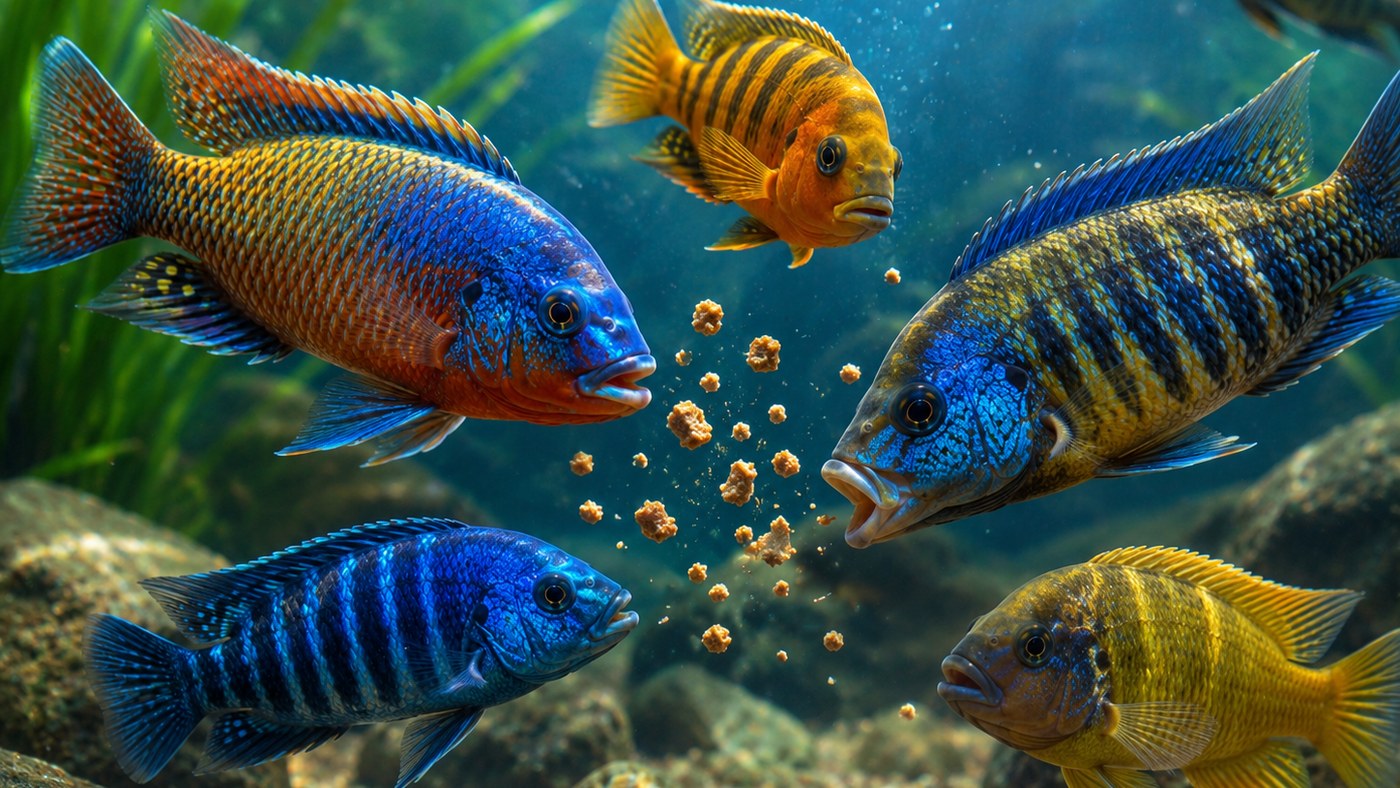
Feeding cichlids well is about more than simply offering food once or twice a day. Different species are adapted to different diets, and the wrong feeding pattern can affect growth, coloration, digestion, behavior, and water quality.
This pillar explains what cichlids eat, how prepared foods fit into a home aquarium, and how feeding habits should change depending on the fish you keep.
A good feeding plan answers three questions:
- What kind of cichlid is this?
- What does that group naturally eat?
- How do I feed enough without polluting the tank?
Why cichlid feeding is not one-size-fits-all
Cichlids are a huge family. Some graze algae and plant material. Some pick at insects and small invertebrates. Some are more predatory. Many aquarium fish are opportunistic and will eat foods that are not ideal as a long-term routine.
That is why “cichlid food” is a starting category, not the whole answer.
Guides
What cichlids eat
Start with the broad food categories before choosing a routine.
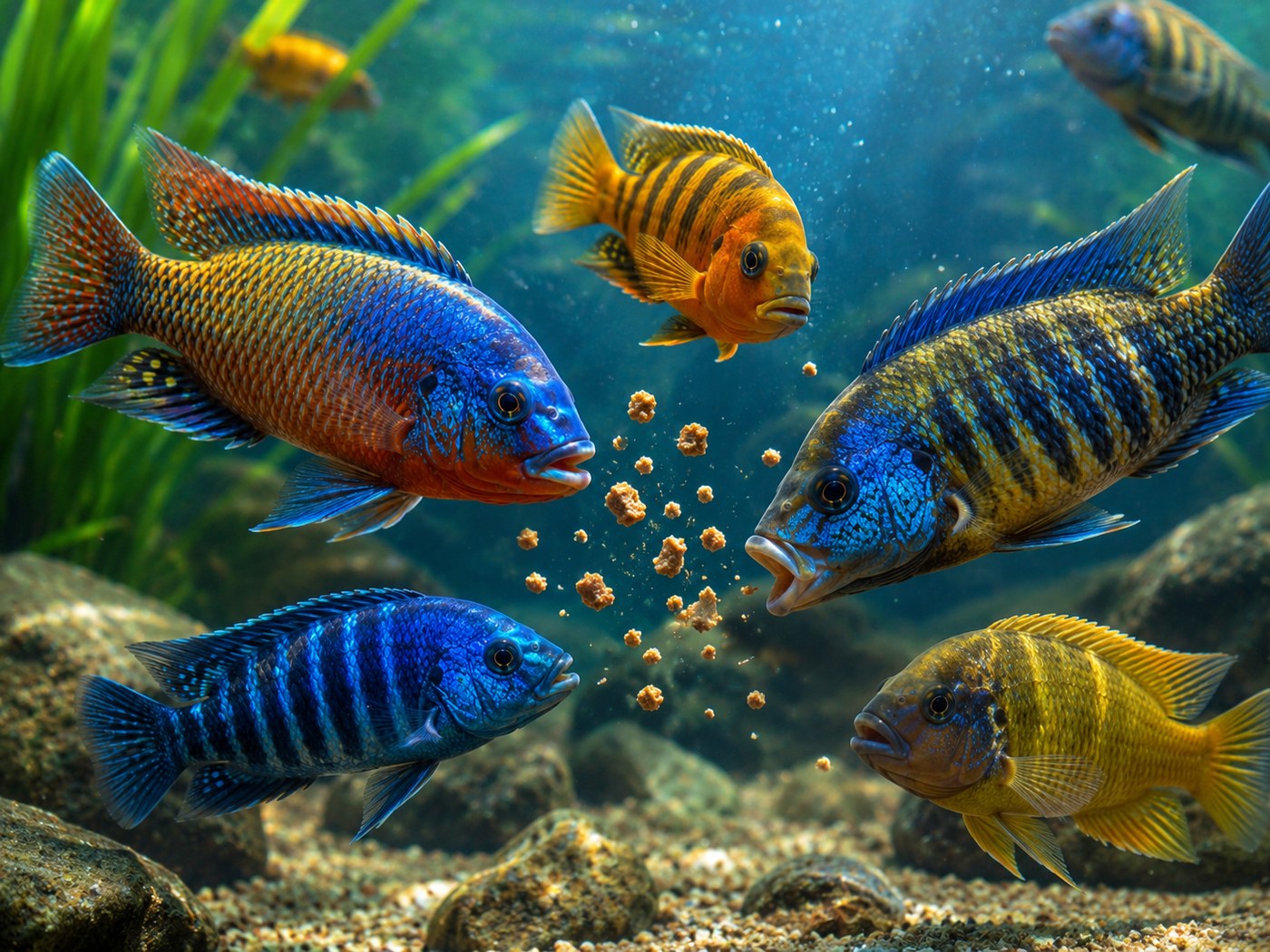
Commercial foods
Use prepared foods wisely without treating every cichlid like the same eater.
Feeding schedules
Build a repeatable rhythm that avoids overfeeding and water-quality problems.
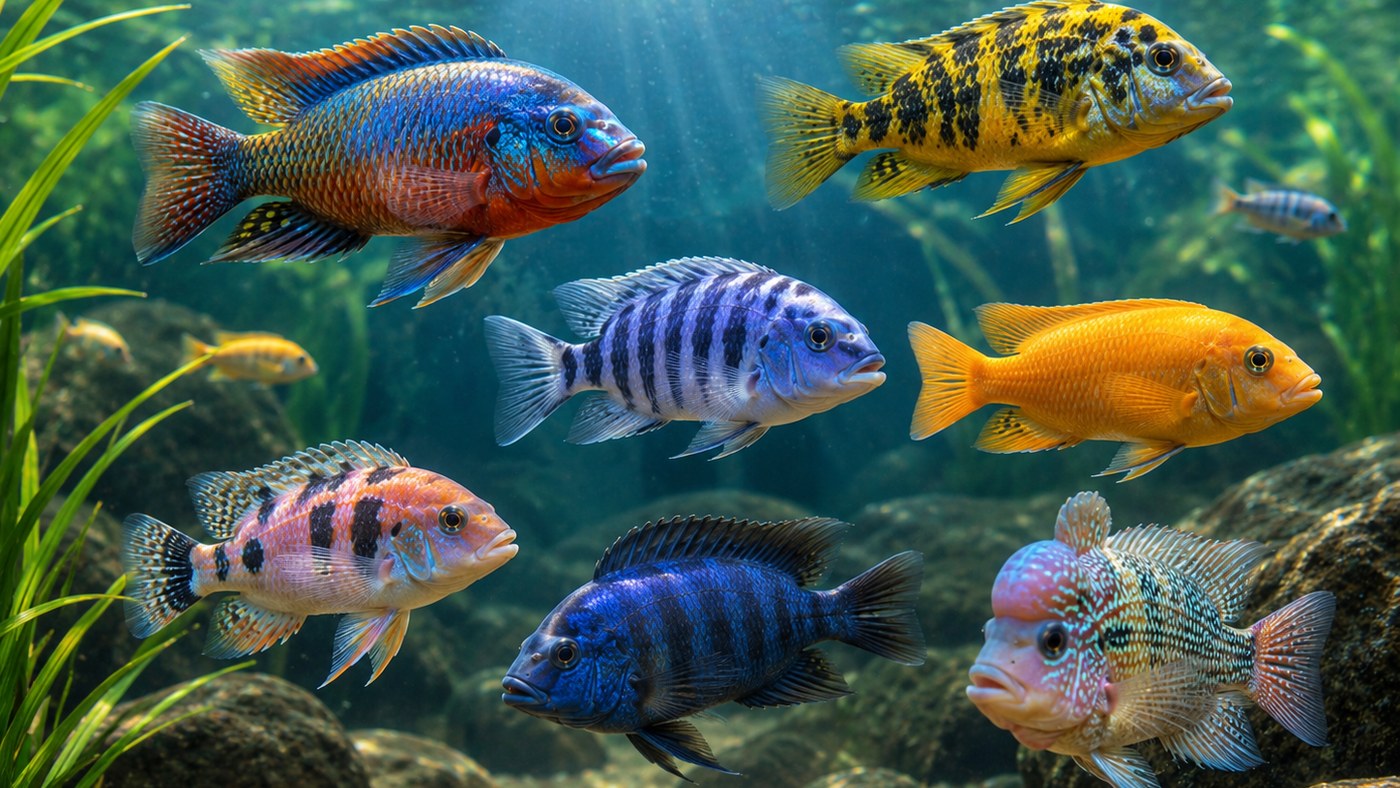
Diet differences
Match feeding habits to the fish group instead of guessing from color alone.
What Cichlids Eat
Review the natural diets of cichlids and how those diets translate into aquarium feeding.
Commercial Foods for Cichlids
Compare common prepared foods and understand how they fit into a balanced diet.
Feeding Schedules
Set a consistent feeding routine that supports fish health without harming water quality.
Diet Differences by Species
See why herbivorous, omnivorous, and carnivorous cichlids should not all be fed the same way.
Practical feeding principles
- Feed for the species, not just for color.
- Keep portions small enough that food does not rot in the tank.
- Watch the fish’s body condition over time.
- Use variety, but do not turn every meal into a rich treat.
- Match pellet size to mouth size.
- Remember that overfeeding creates water problems.
Where store guidance fits
Cichlid.info can compare food categories and use approved offer blocks where the site has reviewed offer data. The shopping goal is not to chase the most expensive label. It is to choose a food that fits the fish group and supports a routine you can maintain.
For shopping-focused help, start with:
Why this pillar matters
Nutrition affects both fish health and aquarium maintenance. A good feeding plan keeps fish in better condition and helps prevent avoidable water-quality problems.
If a tank is cloudy, fish are bloated, or aggression spikes at feeding time, the feeding routine is one of the first things to review.