Beginner Cichlid Tank Setup
A simple step-by-step guide to setting up your first cichlid aquarium.
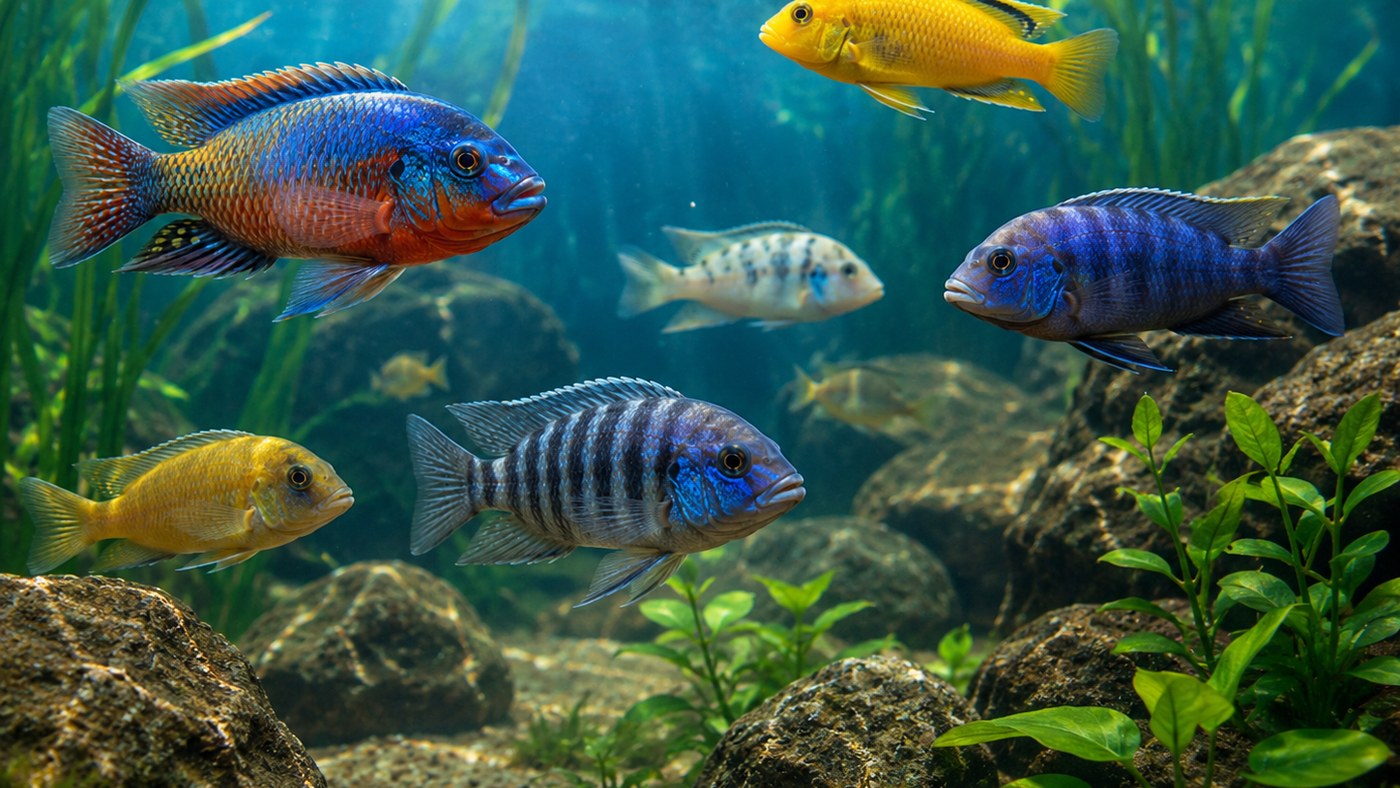
The safest beginner cichlid setup is one where the fish type, tank size, filtration, layout, and water routine all match each other before you start adding livestock. Most beginner trouble starts when one of those pieces is chosen in isolation.
Use this page as the step-by-step route for a first cichlid aquarium, especially if you are still deciding between an African, South American, Central American, or dwarf cichlid direction.
The big idea is simple: do not start with the prettiest fish in the store. Start with the aquarium you can maintain, the water you can keep stable, and the kind of behavior you are prepared to manage.
What matters most first
Before you buy fish, try to lock in these decisions in order:
- choose the cichlid type
- confirm the adult size and temperament of that group
- confirm the tank size before choosing colors
- build cover and territory into the layout
- stabilize water and filtration
- stock slowly enough to watch how the tank behaves
A beginner cichlid tank is not just a glass box with fish in it. It is a small territory map. Fish need open water, shelter, boundaries, and enough filtration to keep the system from becoming stressful.
The beginner mistake this page helps prevent
Many new cichlid keepers make the same mistake: they shop by appearance first and compatibility second. That can work for calm community fish, but cichlids are often more territorial, more intelligent, and more responsive to layout than beginners expect.
A better route is:
- Pick a tank size you can keep stable.
- Pick one cichlid direction that fits that tank.
- Build the layout for that behavior.
- Add fish gradually.
- Adjust after watching the tank, not before.
Step 1 - Choose your cichlid type
Before buying equipment or fish, decide which kind of cichlid you want to keep.
The most common beginner directions are:
- African cichlids - colorful, active fish that often need rock structure, harder water, and careful stocking.
- South American cichlids - a broad group that can include calmer species, wood-and-plant layouts, and more varied community possibilities.
- Dwarf cichlids - smaller fish with their own territory needs, usually better for aquarists who want a more bounded setup.
- Central American cichlids - often full of personality, but many are too assertive or large for casual beginner mixing.
Helpful guides:
Step 2 - Select the right tank size
Cichlids are territorial fish, so aquarium size matters.
Typical beginner setup thinking:
- smaller tanks can work only with carefully chosen smaller species
- 40 to 55 gallons can support several practical beginner routes
- 75 gallons or more opens more options, especially for active African cichlid groups
- very large or highly aggressive species should not be treated as casual beginner fish
Larger aquariums usually provide:
- more stable water conditions
- more usable territory
- more room for hardscape and hiding structure
- fewer aggression problems when species fit the space
Learn more:
If you want a practical path for a first tank, start with the 55-Gallon Cichlid Starter Setup.
Step 3 - Build the aquarium environment
Most cichlid tanks need structure and hiding spaces, not just open water.
Common elements:
- sand or species-appropriate substrate
- rock formations, caves, or wood structure
- open swimming space between territories
- stable hardscape that cannot collapse
- sight breaks so one dominant fish cannot see every corner
These features help fish establish territory and reduce constant conflict. A bare tank may be easy to clean, but it often gives cichlids nowhere to retreat and nowhere to reset a chase.
Learn more:
Step 4 - Stabilize water conditions
Healthy cichlids require stable water parameters.
Key factors:
- temperature
- pH and hardness
- filtration strength
- ammonia and nitrite control
- nitrate management
- water-change routine
For beginners, stable water usually matters more than chasing a perfect number on day one. A tank that swings constantly is harder on fish than a tank kept steadily within a suitable range for the species.
Learn more:
Step 5 - Plan the first stocking pass
Do not build a complete fantasy stocking list before the tank has proven itself. Start with a conservative plan and keep room to adjust.
A safer first pass usually means:
- avoid mixing fish from very different water or behavior profiles
- avoid buying one of everything
- avoid adding the most aggressive fish first without a plan
- avoid combining large future bruisers with small peaceful fish
- leave margin for growth
A cichlid that looks manageable at the store can become a different fish as it matures. Adult size and adult temperament matter more than juvenile color.
Step 6 - Add fish slowly and watch the pattern
Even a good setup can go sideways if too many fish are added too quickly or if the species mix is wrong.
Watch for:
- one fish controlling the whole tank
- fish pinned in corners
- constant chasing
- hidden fish that never come out to eat
- cloudy water after feeding or stocking changes
- repeated torn fins or stress behavior
Helpful follow-up pages:
Beginner setup checklist
Before you bring fish home, make sure you can answer these questions:
- What adult size will these fish reach?
- Do they need hard, alkaline water or softer water?
- Are they rock dwellers, open swimmers, plant-friendly fish, or diggers?
- How will weaker fish escape a chase?
- What filter will handle the waste load?
- How will you test the water?
- What is your water-change routine?
- What is your backup plan if one fish becomes too dominant?
If any answer is vague, slow down and use the linked guides before buying livestock.
Best next step
If you want the most concrete beginner route instead of the general sequence, use the 55-Gallon Cichlid Starter Setup. If you are still comparing tank-size fit, use Best Beginner Cichlids by Tank Size.