African Cichlids Overview
Overview of African cichlid groups and their typical aquarium requirements.
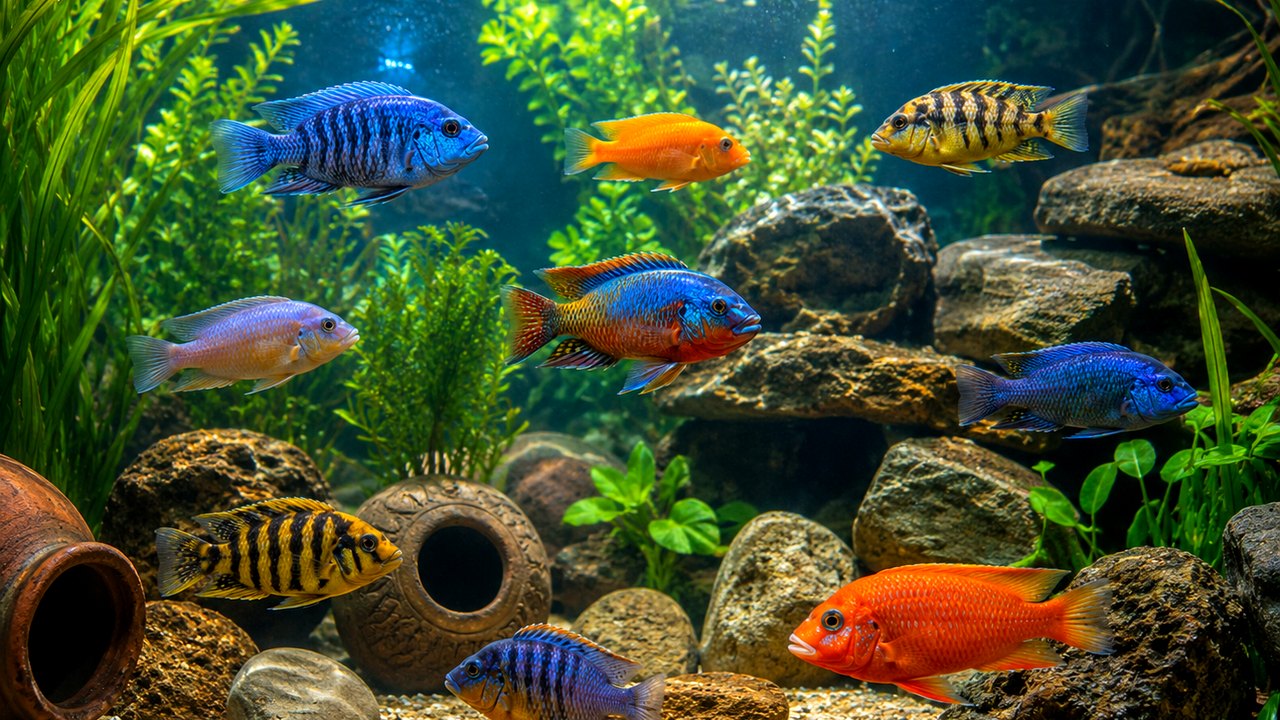
African cichlids are among the most colorful and active freshwater fish kept in aquariums. Most commonly kept species originate from three large lakes in East Africa: Lake Malawi, Lake Tanganyika, and Lake Victoria.
These fish are known for their bright colors, territorial behavior, and fascinating social interactions. Many species spend their time defending rocky territories, digging in the substrate, or interacting with other fish in complex hierarchies.
Major African Cichlid Groups
Lake Malawi cichlids are the most common aquarium species. They are typically divided into two groups:
- Mbuna – rock-dwelling fish that live among stone structures.
- Haps and Peacocks – more open-water swimmers with vibrant colors.
Lake Tanganyika cichlids tend to show unusual behaviors such as shell dwelling or cooperative breeding.
Aquarium Considerations
If you are deciding between common African beginner directions, compare Peacock vs Mbuna for Beginners. If you want a practical baseline before choosing fish, use the 55-Gallon Cichlid Starter Setup.
African cichlids usually require:
- larger aquariums
- strong filtration
- rocky territories
- careful species selection
Understanding their natural environment helps aquarists design aquariums that reduce aggression and support healthy behavior.
If you are planning a first African cichlid tank, these setup pages are the most useful next step:
Affiliate disclosure
This site may earn commissions from qualifying purchases. Recommendations are editorially selected to match the topic of the page.
CaribSea African Cichlid Mix Sahara Sand - 20 lb - Natural Substrate Buffers pH, Ideal for African Cichlids
Penn-Plax Stone Hideaway Aquarium Rock, Small
Practical Example
A well planned aquarium usually solves problems before they appear. When aquarists match tank size, species temperament, and layout structure, fish behave more naturally and stress stays lower.
Beginner Mistakes
• choosing fish before planning the tank
• mixing incompatible species based on color
• ignoring early warning signs like chasing or hiding
• skipping routine water changes
Decision Guidance
If you are unsure what to do, step back and ask three questions:
- Does the tank size fit the adult fish?
- Does the layout provide shelter and territory?
- Are the species compatible in temperament and water needs?
If those three conditions are met, most cichlid aquariums become much easier to maintain.
Best Next Step
If you are narrowing toward Malawi fish, compare Peacock vs Mbuna for Beginners. If you are still building the tank around the fish, start with the 55-Gallon Cichlid Starter Setup.