Can You Keep Wild Cichlids? The Florida Bucket Problem Explained
A caution-first Cichlid.info guide to wild cichlids, buckets, collection, live transport, release, and why Florida field fish should not be treated as free aquarium stock.
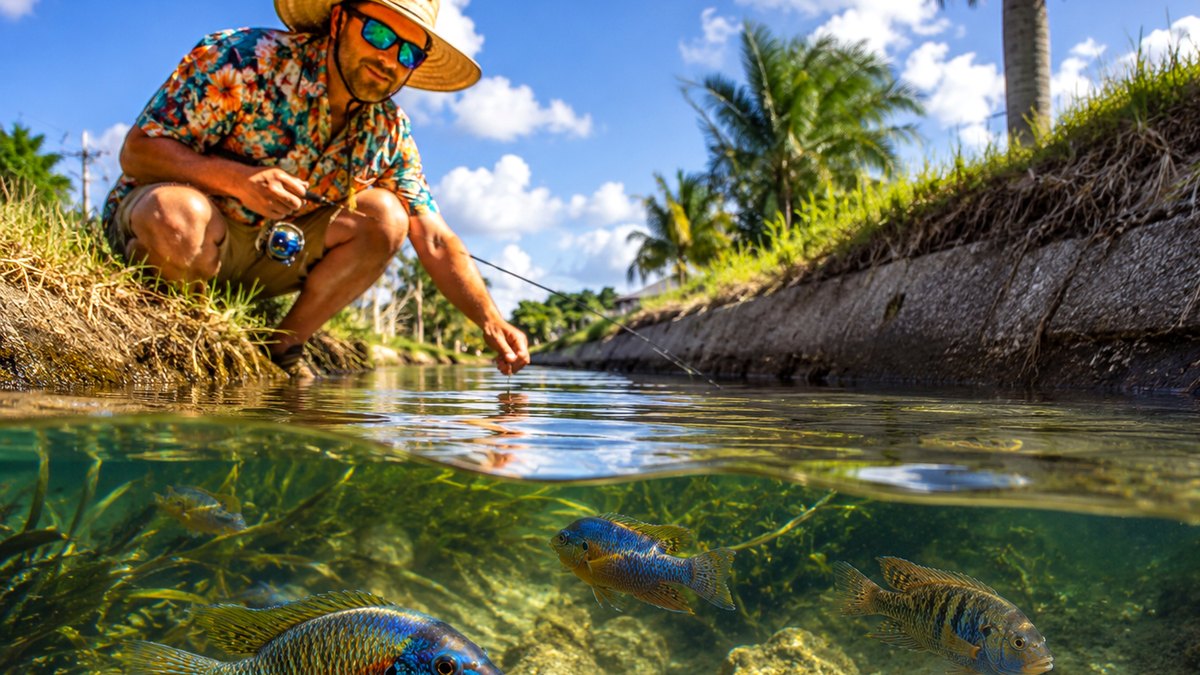
Can you keep wild cichlids? The honest answer is: do not start with the bucket. Start with the rules, the fish, the water, the purpose, and the risk of moving live organisms.
This page is not legal advice and not collection permission. It is a caution-first explanation for the moment when someone sees a cichlid in Florida water and thinks, “Could I take that home?”
The short Cichlid.info answer
Do not collect or move live wild cichlids unless current official rules clearly allow it and you have a responsible plan.
Do not move fish between waterbodies. Do not release aquarium fish outdoors. Do not dump captured fish somewhere else because your plan changed. Do not assume a small fish, nonnative fish, or ditch fish is regulation-free.
If you are unsure, leave the fish where it is and keep the experience as observation.
Why the bucket changes everything
A fish in the water is a field observation. A fish in a bucket is possession, stress, water movement, possible transport, and decision pressure.
The bucket makes people improvise. It creates questions like:
- Where is the fish going?
- Is this fish legal to possess alive?
- Can it be transported?
- Can it be released?
- Is it nonnative, native, regulated, or misidentified?
- What happens if the water gets hot?
- What if the aquarium at home is not ready?
That is why the bucket is the symbol of this whole cluster. It turns a fish story into an obligation.
Wild fish are not automatically aquarium fish
A wild cichlid may carry parasites, disease, injury, stress, or behavior that makes it a poor aquarium choice. It may be misidentified. It may not fit your tank. It may need conditions you cannot provide. It may be illegal or irresponsible to move.
Aquarium keeping works best when fish are sourced responsibly, quarantined when appropriate, and matched to a prepared tank. A roadside net and a warm bucket are not a responsible stocking plan.
Nonnative does not mean no rules
People sometimes think nonnative fish are a loophole. That is not a safe assumption.
FWC maintains nonnative-species rules and guidance because nonnative animals can create ecological, economic, and human-safety concerns. The fact that a fish is nonnative does not automatically tell you what gear is allowed, whether live possession is allowed, whether sale is allowed, or what must happen after capture.
Use current FWC guidance, not a comment-thread shortcut.
Observation is usually the better story
For most readers, the best version is simple:
- observe from legal public access
- photograph only when safe
- record location generally, not as a secret-spot invitation
- compare to official species references
- do not net unless rules and purpose are clear
- do not move live fish
- do not release aquarium life outdoors
A good observation can still be useful. It can teach you behavior, habitat, and identification without turning into a possession problem.
If you are an aquarium keeper
The aquarium-keeper lesson is responsibility.
Keep captive fish secure. Do not release unwanted fish. Do not dump aquarium water or plants outdoors. Plan tanks before buying fish. Rehome responsibly when a fish outgrows a setup or no longer fits your aquarium.
A wild Florida cichlid story should make aquarium keepers more careful, not more casual.
Where to go next
- Aquarium Fish in Florida Canals explains the release side of the story.
- Wild Cichlids in Florida explains wild versus native versus nonnative language.
- Small Cichlids in Florida Ditches handles nets, observation containers, and tiny fish.
- Catching Cichlids in Florida Ditches covers fishing and netting cautions.
- Cichlid Starter Pack is a better path if you want aquarium fish responsibly.
Source notes
Check current official guidance before collecting, possessing, transporting, or releasing fish:
- FWC Don’t Let It Loose
- FWC regulations for nonnative species
- FWC methods of taking freshwater fish
- FWC methods of taking bait
This page is a caution frame. It does not determine legality for a specific fish, waterbody, gear type, or purpose.