Aquarium Fish in Florida Canals: How Pet-Fish Stories Become Water Stories
A Cichlid.info explainer on aquarium fish, Florida canals, nonnative releases, and why outdoor cichlid stories should lead to responsibility rather than collection.
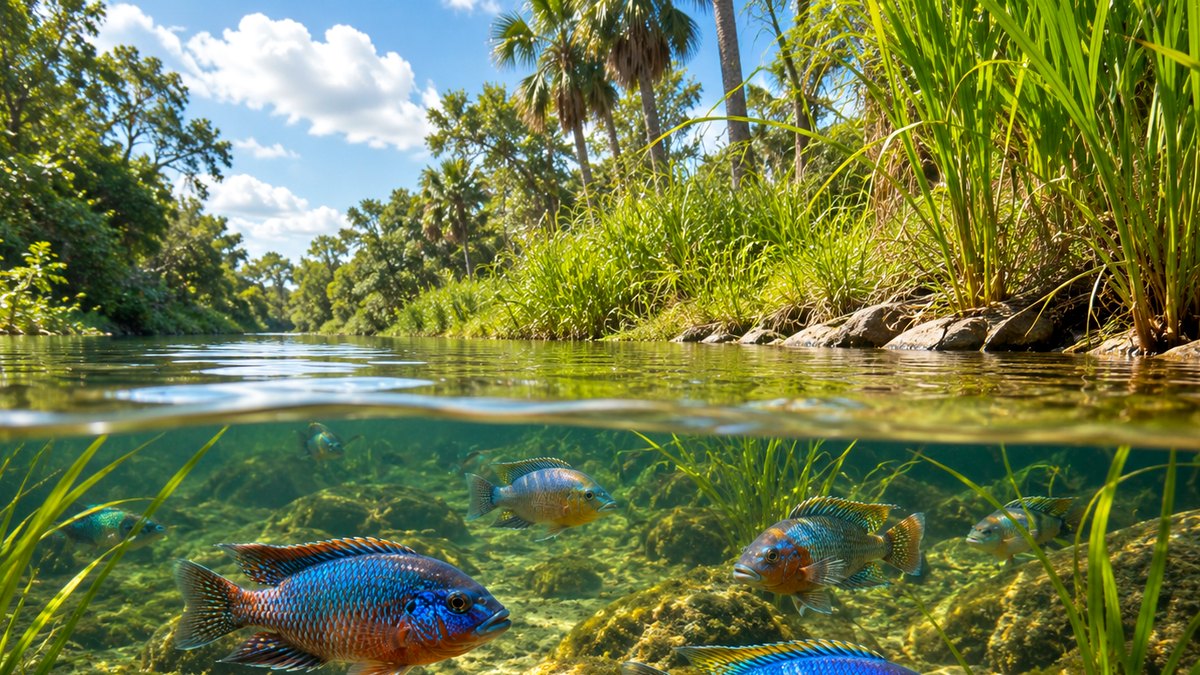
Aquarium fish in Florida canals are one of those topics that sound like folklore until you understand how warm water, human behavior, and drainage landscapes meet. The phrase brings up images of colorful fish in ordinary water, but the responsible version of the story starts with a warning: do not release aquarium fish, plants, snails, or water into Florida waterways.
The canal may look like a free aquarium. It is not.
Why the story sticks
The story sticks because the contrast is memorable. Aquarium fish are supposed to be behind glass. Canals are supposed to be infrastructure. When a colorful or territorial fish appears near a roadside bank, the two worlds collide.
That collision creates the Cichlid.info angle:
- aquarium behavior outdoors
- pet fish as ecological responsibility
- warm-water canals as habitat
- small fish that make rules feel bigger
- folklore that should make people more careful
How aquarium pathways become outdoor problems
Nonnative fish can reach outdoor systems through human actions, including releases or escapes. FWC’s Don’t Let It Loose campaign describes release of nonnative fish and wildlife as illegal and potentially harmful to animals and the environment.
That point belongs near the top of every aquarium-fish-in-the-wild story. The interesting part is not that people can see aquarium-like fish outdoors. The important part is that people should not add more aquarium life to outdoor water.
Why canals make the story visible
Canals make the story visible because they bring water into daily life. People see water beside roads, neighborhoods, businesses, parks, and travel routes. That visibility makes fish encounters feel casual.
But visibility is not access. A canal can be visible, fishy, and completely wrong for fishing or collecting because of private property, local rules, unsafe banks, stormwater function, traffic, or water-quality concerns.
The better field habit is to treat canal fish as an observation first.
Cichlids are especially memorable outdoors
Cichlids are not the only nonnative fish people notice, but they make strong characters because many are visual, territorial, and behaviorally obvious. They may hold a small patch of edge habitat, charge a tiny lure, guard young, or posture near cover.
That is why cichlid stories travel well. They feel like little dramas in small water.
The responsible lesson is still the same: interesting does not mean harmless, and familiar aquarium behavior does not make a wild fish a pet.
The release myth
The worst myth is that a released fish is being rescued.
A pet fish released into outdoor water may suffer, die, spread disease or parasites, compete with native species, or contribute to a nonnative population. Releasing aquarium water, plants, snails, or animals can also introduce organisms people did not intend to move.
If someone cannot keep an aquarium animal, the solution is not a canal. Look for responsible rehoming, store return options where available, hobbyist networks, or official amnesty guidance when relevant.
The collection myth
The mirror-image myth is that outdoor aquarium-like fish are free to collect.
That is also too simple. Collection rules, possession rules, gear rules, live transport, and release decisions can be complicated. A person with a net and a bucket may be doing something very different from a person making a legal cast in public water.
Before any collection, check current official rules. When uncertain, do not collect.
Where this fits in the site
Use this page when the question starts with aquarium culture and turns outward. Use these next:
- Florida Cichlids for the broad map.
- Wild Cichlids in Florida for outdoor/established/nonnative language.
- Florida Canal Cichlids for habitat.
- Can You Keep Wild Cichlids? for the collection caution.
- Cichlid Learning Hub for aquarium-care paths.
Source notes
Start with current official guidance:
- FWC Don’t Let It Loose
- FWC Florida’s Nonnative Fish and Wildlife
- FWC regulations for nonnative species
This page is a responsibility explainer, not a release, collection, or aquarium-stocking guide.