Florida Cichlids: Aquarium Fish, Canal Fish, and Nonnative Water Stories
A Cichlid.info guide to Florida cichlids, including aquarium context, canal habitat, nonnative fish cautions, and the ditch-fishing folklore layer.
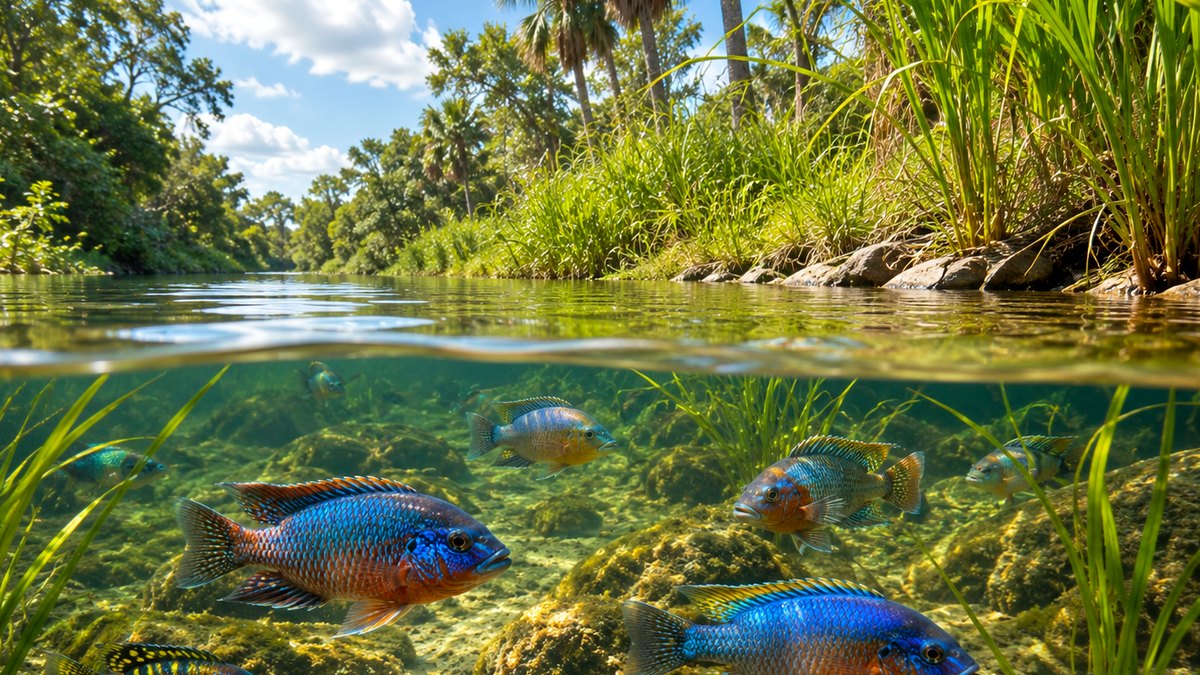
Florida cichlids sit at the weird intersection of aquarium culture, warm-water ecology, drainage infrastructure, and roadside curiosity. In a home aquarium, a cichlid is a pet fish with personality. In Florida water, a cichlid can become part of a bigger story about nonnative species, canals, stormwater ponds, fishing rules, and the human habit of underestimating ordinary-looking water.
This page is the broad Cichlid.info map for that world. Start here when the question is not only “what species is this?” but also “why does Florida have cichlids outside aquariums at all?”
Florida cichlids are not one simple category
People use the phrase “Florida cichlids” loosely. It can mean several different things:
- aquarium cichlids kept by Florida hobbyists
- nonnative cichlids established in parts of Florida water
- Mayan cichlids seen or caught in canals and other warm water
- small unidentified cichlids near ditch or pond edges
- colorful fish people assume came from aquariums
- field-guide questions that start with a blurry photo from a canal bank
That loose language is useful for curiosity, but it is not enough for identification, regulation, harvest, collection, or aquarium decisions. The fish, the water, the gear, and the purpose all matter.
The aquarium side of the story
Cichlids became famous in aquariums because they are not background fish. They recognize patterns, defend territory, raise young, posture at rivals, investigate objects, and make keepers feel like the fish is paying attention.
That is why a cichlid in outdoor Florida water feels different from a generic small fish. It carries aquarium energy into a ditch, canal, or pond edge. It looks like a hobby fish that wandered into infrastructure.
The danger is drawing the wrong lesson. Seeing cichlids outdoors should not make anyone release aquarium fish. FWC’s nonnative-species guidance is blunt about the release problem: nonnative fish and wildlife releases are illegal and can harm animals and the environment. Outdoor cichlids are a reminder to keep aquarium life contained, not a reason to blur the line further.
The canal side of the story
Florida has a lot of managed water. Canals, ponds, drainage cuts, and roadside water shape how people encounter fish.
A visitor may notice cichlids without planning to fish. A canal behind a plaza, a pond near a road, or a shallow edge beside a neighborhood can turn into a fish question. That is why Cichlid.info separates the observation from the action:
- noticing fish is one thing
- identifying fish is another
- fishing is another
- netting is another
- collecting live fish is another
- moving fish is a completely different problem
That separation keeps the site useful and safe.
The nonnative side of the story
Some cichlids in Florida are part of the state’s broader nonnative fish and wildlife picture. FWC describes its Nonnative Fish and Wildlife Program as focused on prevention, early detection, rapid response, control, management, education, and outreach. That is the right frame for this topic.
The fish may be fascinating. The behavior may be memorable. The story may be funny. But nonnative fish are not just mascots for weird Florida content. They also raise real questions about ecology, regulation, release, and responsibility.
Cichlid.info can enjoy the strange field experience while still treating official guidance as the anchor.
The Mayan cichlid as the public face
The Mayan cichlid is the species many Florida ditch-cichlid conversations orbit around. FWC describes it as highly adaptable and associated with canals, rivers, lakes, and marshes, with tolerance for a wide range of salinities. USGS treats it in the Nonindigenous Aquatic Species database as an exotic fish species.
That makes Mayan cichlids a good teaching example, but not every Florida cichlid sighting is automatically a Mayan cichlid. Juveniles are harder. Photos can be bad. Other fish can confuse the story. The more certain you need to be, the more you should rely on current official or primary references.
Use Mayan Cichlids in Florida when the question is species-specific.
The ditch folklore side of the story
The folklore layer is not invented legend. It is the repeated Florida pattern:
- a ditch that looked empty
- a canal that was not supposed to be interesting
- a fish that looked too colorful for the place
- a tiny net that suddenly made the rules complicated
- a person who almost did something dumb, then thought better of it
That is enough folklore. We do not need fake stories. Florida gives us real ones if we keep the tone honest.
The Cichlid.info rule is simple: look closer, act smarter.
How to use the Florida cichlid cluster
Use these pages by intent:
- Florida Ditch Cichlids for the big field-guide and folklore frame.
- Wild Cichlids in Florida for the wild/established/nonnative distinction.
- Aquarium Fish in Florida Canals for the release and canal-story angle.
- Why Florida Has So Many Nonnative Fish for the broader explanation.
- Can You Keep Wild Cichlids? for the collection, bucket, and live-fish caution.
- Catching Cichlids in Florida Ditches for fishing and netting cautions.
Source notes
Start with current official or primary references before making species, collection, or regulation decisions:
- FWC Florida’s Nonnative Fish and Wildlife
- FWC Don’t Let It Loose
- FWC Mayan Cichlid profile
- USGS NAS Mayan cichlid profile
This page is a field guide and topic map. It does not verify access, licenses, harvest rules, collection rules, or local water conditions for any particular Florida waterbody.