Wild Cichlids in Florida: What Established Outdoor Cichlids Really Mean
A careful guide to wild, established, and nonnative cichlids in Florida, with source-aware cautions about identification, collection, and aquarium assumptions.
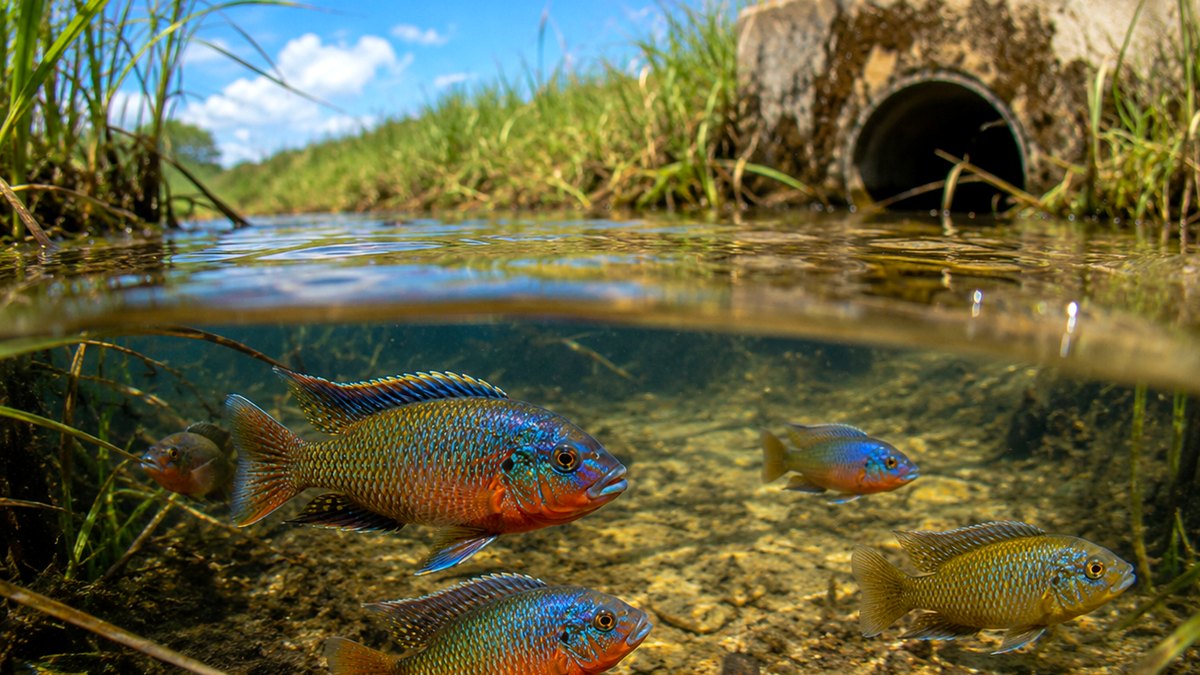
Wild cichlids in Florida can sound like a contradiction if you only know cichlids from aquariums. But in parts of Florida, some cichlids are outdoor fish too: living, feeding, reproducing, and being noticed in canals, ponds, marshy edges, and connected warm-water systems.
The important word is not “wild” as in native. It is “wild” as in outside captivity. Many outdoor Florida cichlid conversations are really about nonnative or established fish, not native Florida species.
Wild does not always mean native
A fish can be living in the wild and still be nonnative. It can be established in an area and still have arrived through human influence. It can be common enough for anglers to notice and still not belong in the same category as native freshwater fish.
That distinction matters because people often use casual words like:
- wild
- invasive
- exotic
- nonnative
- established
- aquarium escapee
- canal fish
Those words overlap in everyday speech, but they are not interchangeable. Cichlid.info uses them carefully. When the legal or ecological detail matters, use official sources such as FWC and USGS rather than casual labels.
Why cichlids can survive outdoors in Florida
Florida gives some tropical and subtropical fish a better chance than most of the United States. The ingredients are obvious once you look at the landscape:
- warm climate
- shallow water
- canals and drainage connections
- marshes and pond edges
- urban and suburban water systems
- food sources like insects, small fish, shrimp, and snails
- human pathways that move organisms around
That does not mean every outdoor waterbody can support every cichlid. It means Florida creates enough warm-water opportunity that some cichlid species become part of the outdoor fish conversation.
Why established fish are not free aquarium stock
Outdoor cichlids tempt people into bad assumptions.
One bad assumption is: “If it is nonnative, I can just take it home.” Another is: “If similar fish are already in Florida, releasing aquarium fish will not matter.” A third is: “If the fish is small, the rules are probably small too.”
Those assumptions are exactly what this site should push against.
Collection, possession, live transport, release, and aquarium use can all involve different rules and risks. The safe Cichlid.info position is boring on purpose: do not collect or move live fish unless current rules clearly allow it and you know what you are doing.
How to think about sightings
A useful field note is better than a loud guess.
When someone sees a possible wild cichlid in Florida, the useful details are:
- approximate size
- water type
- region of Florida
- body shape
- bars, spots, or tail markings
- whether the fish was alone or in a group
- behavior near structure or other fish
- clear photos from the side if possible
Do not force a species ID from a shaky video. Many fish are easier to misidentify when small, stressed, shaded, or seen through glare.
The folklore layer
Wild Florida cichlids have folklore energy because they turn ordinary water into a little mystery. A canal that looked empty becomes a place with territorial fish. A pond edge becomes a classroom. A roadside ditch becomes the reason someone goes home and reads about nonnative fish for an hour.
That is good folklore. It makes people pay attention.
Bad folklore tells people to trespass, collect fish for aquariums, dump unwanted pets, or ignore official rules. Cichlid.info is interested in the first kind, not the second.
Where to go next
- Florida Cichlids gives the broad map of aquarium, canal, and nonnative context.
- Mayan Cichlids in Florida gives a species-specific example.
- Aquarium Fish in Florida Canals explains the aquarium-release side of the story.
- Can You Keep Wild Cichlids? handles the bucket, collection, and live-fish caution.
- Florida Ditch Cichlids carries the field-guide and folklore frame.
Source notes
Use current official and primary sources for decisions:
- FWC Florida’s Nonnative Fish and Wildlife
- FWC regulations for nonnative species
- FWC Don’t Let It Loose
- USGS Nonindigenous Aquatic Species database
This page explains the concept. It does not give collection permission or identify any particular fish from a description.