Why Florida Has So Many Nonnative Fish: Warm Water, Canals, and Human Decisions
A Cichlid.info explainer on why Florida nonnative fish stories happen, with cichlids, canals, aquarium releases, and responsibility framed carefully.
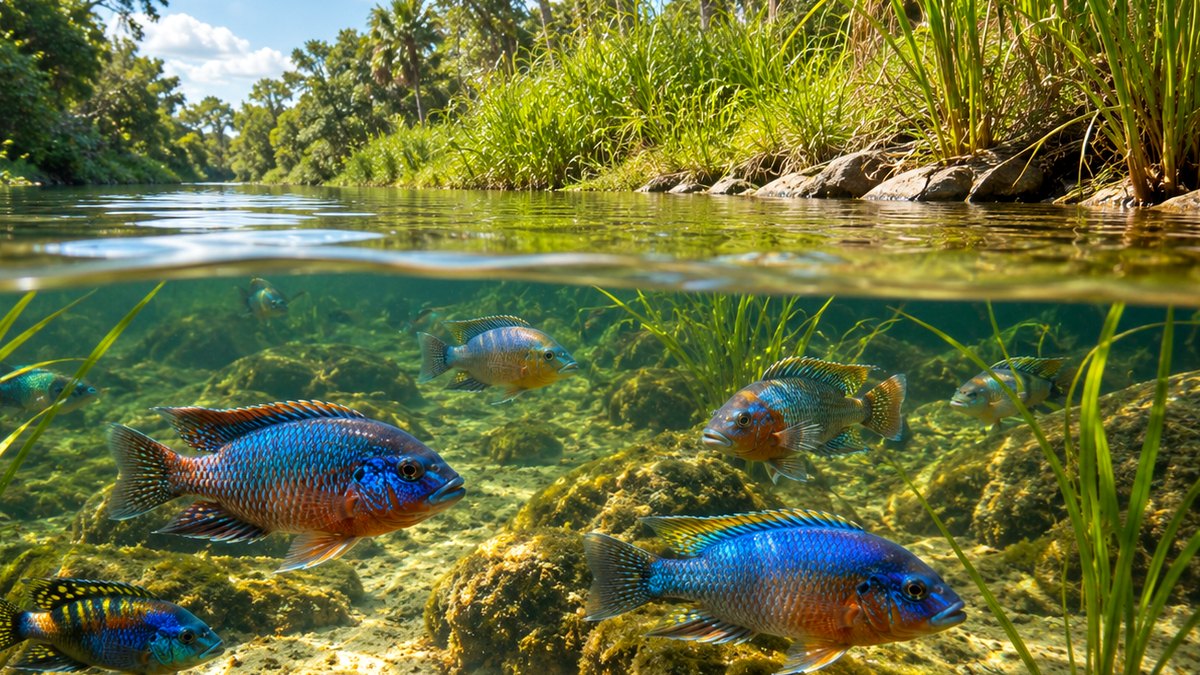
Florida has many nonnative fish stories because climate, water, and human decisions overlap in unusually visible ways. Warm weather helps. Canals and connected water help. Aquarium culture, bait movement, releases, escapes, and human carelessness can all matter too.
This page is not a complete Florida invasive-species textbook. It is the Cichlid.info version: the context a cichlid reader needs before treating every colorful canal fish as a novelty.
Warm water changes the odds
Many aquarium fish come from warm regions. Florida’s climate gives some tropical and subtropical species a better outdoor chance than colder states.
Cold snaps can still matter. Salinity can matter. Water depth, cover, food, and local conditions all matter. But the broad pattern is easy to understand: Florida has enough warm water for some nonnative fish to survive where they would fail elsewhere.
Canals and ponds make encounters visible
Florida’s managed water landscape brings fish close to people. Canals, retention ponds, drainage cuts, lake edges, ditches, and marsh connections put water near roads, stores, homes, parks, and travel routes.
That does not make all of it public. It does make encounters more likely. A person may notice a fish while walking, driving, shopping, or waiting at a light. That visibility is one reason nonnative fish stories spread.
Human decisions move organisms
Nonnative fish do not appear by magic. Human pathways matter.
Examples can include aquarium releases, escapes, bait movement, ornamental trade issues, water movement, and accidental or intentional introductions. FWC’s nonnative program focuses on prevention, early detection, response, control, management, education, and outreach because the human side is part of the solution.
The most important household rule is simple: do not release aquarium fish, plants, snails, or water outdoors.
Why cichlids become the memorable example
Cichlids are excellent storytellers because they are visually and behaviorally noticeable. They can be colorful. They can be territorial. They can defend nests or fry. They can hit small baits hard. They can look like aquarium fish acting like canal fish.
That makes them memorable, but it also tempts people to simplify the story.
A cichlid in a canal is not automatically a pet. It is not automatically native. It is not automatically legal to collect. It is not automatically a problem you understand from one photo.
The folklore should teach prevention
The best Florida nonnative fish folklore ends with prevention.
A person sees something strange in a canal, learns what it might be, understands how releases can create problems, and becomes more careful with aquarium life. That is a useful story.
The worst version turns nonnative fish into a scavenger hunt for aquarium stock or a joke about dumping unwanted pets. Cichlid.info should never push that version.
Where to go next
- Florida Cichlids connects this broader context back to cichlids.
- Aquarium Fish in Florida Canals focuses on releases and canal stories.
- Wild Cichlids in Florida explains wild, established, nonnative, and native language.
- Can You Keep Wild Cichlids? handles collection cautions.
- Florida Man Cichlid Fishing keeps the weird roadside angle pointed toward safer behavior.
Source notes
Use current official and primary references:
- FWC Florida’s Nonnative Fish and Wildlife
- FWC Don’t Let It Loose
- FWC regulations for nonnative species
- USGS Nonindigenous Aquatic Species database
This page is a topic explainer. It does not classify any specific fish, waterbody, or legal situation.